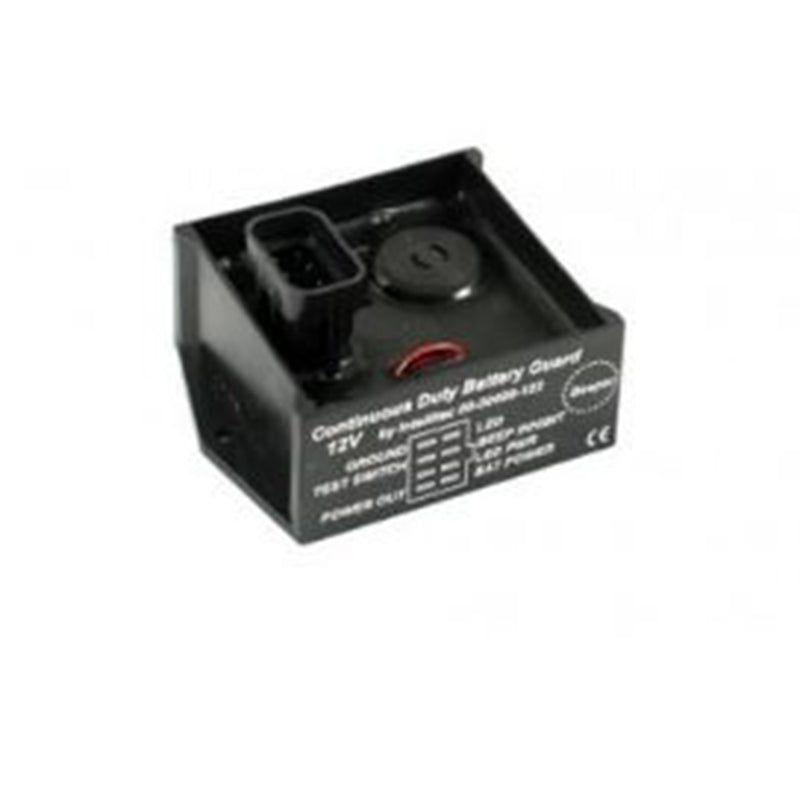
The Battery Guard CD Tail Lift was developed specifically to protect engine-starting batteries from being excessively drained by tail-lift operation. It monitors battery power during lift operation and, when the voltage drops below the low-voltage threshold, triggers a four-minute voltage-sensitive timer.
After two minutes at low voltage, an audible beeper and flashing LED give the operator advance warning. If the voltage remains low for the full four minutes, the system isolates the tail lift to preserve starting voltage. Starting the engine restores tail-lift power, and the system automatically resets once the charging voltage rises above the reset threshold.
The unit is typically installed inside the pump housing and fits in around an hour. It uses fully waterproof Delphi Packard IP67 connections, supports night silent operation, and can be installed as OEM or retrofitted. It is available in 12V and 24V versions (K13 / K14) and is approved by Ratcliff, Ray Smith Group and Ross & Bonnyman. It also suits many other plant and electrohydraulic equipment types. UK manufactured.